
The Solventless Field Guide: Live Rosin, Cold Cure, and What Mountain Grease Gets Right
A connoisseur's primer on the solventless extraction game — what the labels actually mean, why micron sizes matter, and the cold cure on the Kush Klinic menu that's worth the trip.
Walk into any California dispensary in 2026 and the concentrate menu is a wall of unfamiliar terminology. Live rosin. Cold cure. Hash rosin. Bubble hash. 90u, 120u, 70u. Tier 1, full spec, single-source. To anyone who didn't grow up on dab rigs, the menu reads like a parts catalog. To someone who actually understands what's behind those labels, it reads like a wine list.
Solventless concentrates are one of the few corners of the cannabis market where the price tag actually correlates with quality — and where the difference between a $40 gram and a $120 gram is something you can taste, not just read about. This guide breaks down what the labels mean, how to read a solventless menu, and which products on the Kush Klinic catalog are worth the splurge.
Solventless vs. Solvent: The Line That Matters
The single most important distinction in concentrates is whether the extraction used a chemical solvent. Everything else — texture, color, flavor, packaging — flows from that one decision.
Solvent-based concentrates use butane, propane, or ethanol to strip the cannabinoids and terpenes off the plant. The solvent is then purged out before the final product hits the shelf. Done correctly, this is safe and produces extracts like BHO shatter, live resin badder, and most pen cartridges. Done poorly, residual solvent ends up in your dab.
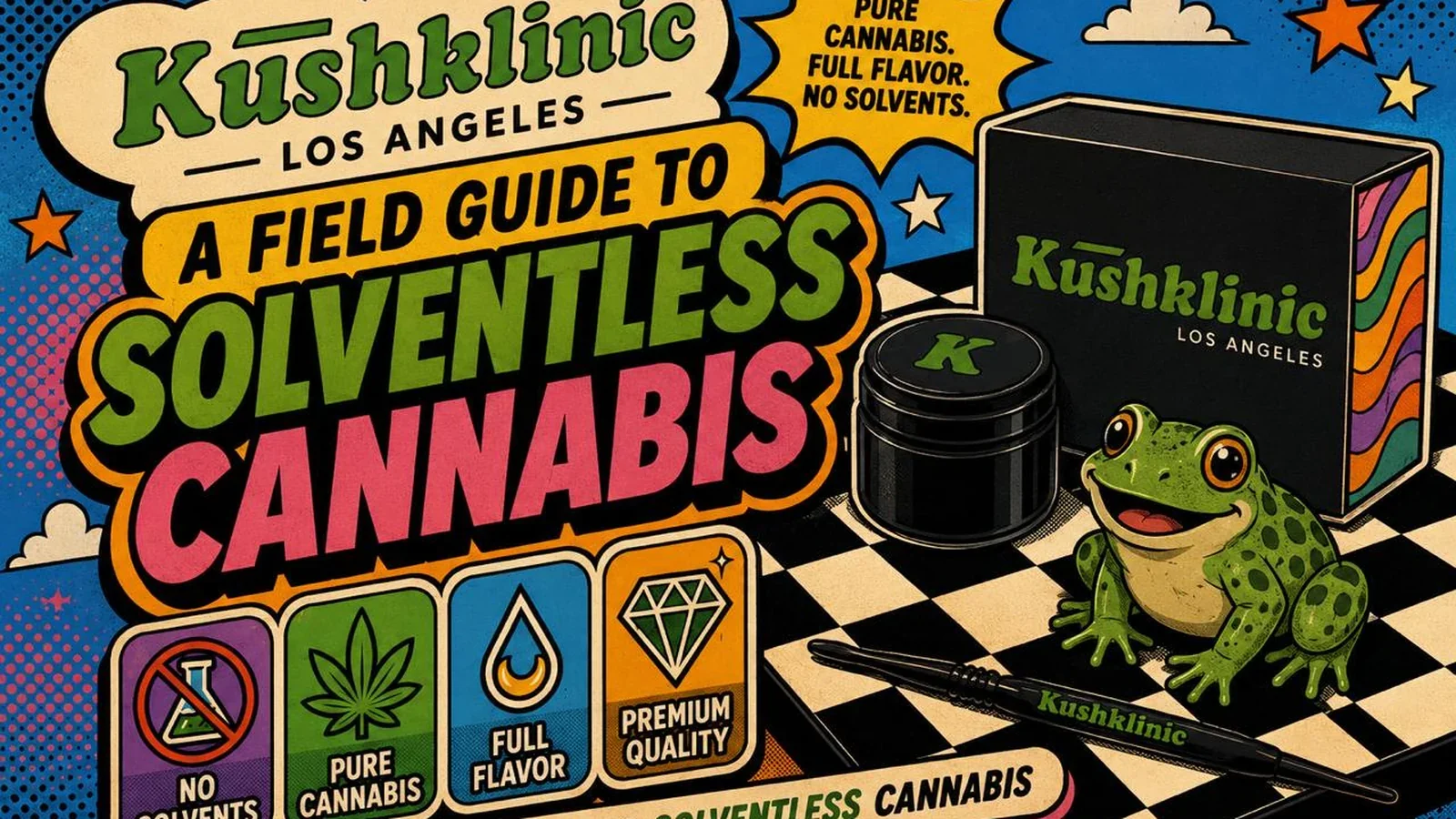
Solventless extractions use only physical agitation, ice water, heat, and pressure. No chemicals enter the process at any stage. The result is a concentrate that preserves the plant's original terpene profile more intact than any solvent method can — and one that can never have residual solvent contamination because there was no solvent to begin with.
This is why solventless costs more. Lower yields per pound of starting material, more labor, premium fresh-frozen flower required as input. The math doesn't favor scale. The math favors quality.
The line between solventless and solvent is the line between hash culture and the rest of the concentrate market.
Reading a Solventless Menu
Once you've established a product is solventless, the next layer of labels tells you what kind of solventless. The terms are not interchangeable. Each describes a different processing decision that affects the texture and flavor of what you're buying.
Why Micron Sizes Matter
The mysterious "120-70u" or "90u" numbers on solventless menus aren't decorative. They refer to the micron size of the screens used to filter trichome heads from the rest of the plant material during extraction. Different micron ranges capture different parts of the resin, and each range produces a meaningfully different end product.
| Micron | Grade | Notes |
|---|---|---|
| 25–45u | Premature trichome heads | Too immature for top-tier rosin. Often blended with other ranges. |
| 45–73u | Mid-range trichomes | Solid hash material. Good for pressing rosin at the everyday tier. |
| 73–90u | The sweet spot | Mature, terpene-dense, presses cleanly into rosin with strong flavor preservation. |
| 90–120u | Tier 1 territory | The fully mature, fully resinous trichome heads. The strain at its loudest. Lower yield, highest-quality output. |
| 120u+ | Larger than ideal | Often plant material contamination. Reputable hash makers screen this out. |
When a product label reads "120-70u," what it's telling you is that the rosin was pressed from trichome material captured in that micron range — usually the goldilocks zone where mature heads dominate but yield is still acceptable. A label that reads strictly "90u" or higher is signaling premium tier, lower yield, higher price.
Mountain Grease — Featured on the Menu
One of the cleanest solventless products currently on the Kush Klinic concentrate menu is from Mountain Grease. The brand has built a reputation in California's hash circles for press-quality cold cure rosins that punch well above their price tier — partly because the source material is properly fresh-frozen, partly because the cure timing is dialed in.
Propane Money — 120-70u Cold Cure Rosin
The 120-70u micron range puts this firmly in the mature-trichome window where flavor preservation peaks. Cold cure stabilization gives it a creamy, scoopable consistency that handles cleanly on a quartz banger without running the moment it hits heat. The 2g format is a connoisseur-volume buy — meaningful gram count for someone who actually uses concentrate as a primary consumption method, not a once-a-month curiosity.
This is the kind of product that proves the solventless premium is justified. Side-by-side with a budget-tier live resin, the difference in flavor clarity is immediate.
How to Actually Dab Solventless
Solventless rosin is more sensitive to temperature than solvent-based concentrates. The terpene profile that justifies the price will get cooked off completely if you dab too hot. Most first-time rosin smokers waste good product by treating it like BHO shatter.
Heat your banger to 450–550°F max.
Lower than you would for shatter or wax. Use a temperature gun or e-nail if you're serious. A quartz banger that glowed orange will scorch the terps.
Wait at least 30 seconds after the heat comes off.
Let the banger cool to a low-heat zone before dropping the dab. The lower the temperature, the more flavor survives.
Use small dabs.
A grain-of-rice portion is plenty for most people. Cold cure rosin is dense, terpene-saturated, and packs significantly more punch per dab than equivalent volume of solvent extract.
Cap it and pull slow.
A carb cap holds the temperature even and lets you draw at low pressure for maximum flavor. Slow, deliberate hits beat hard pulls every time.
Clean between dabs.
Cotton-swab the banger after each session. Reclaim from a previous dab will burn at higher temperatures than your fresh rosin and ruin the flavor of the next one.
Solventless · Same-Day · Curated
Kush Klinic delivers solventless concentrates and the rest of the menu across Los Angeles. Check delivery coverage or browse the solventless concentrate menu directly.
What Else Is Worth Knowing
The California solventless market is wide and getting wider. Beyond Mountain Grease, names worth tracking when they show up on a menu include Heritage Hash Co. (Cup-winner status, Whitethorn Rose dominance), Papa's Select (clean ice water hash program), and operations like Blue River whose proprietary mechanical extraction has pushed the technical envelope. These rotate availability, but the brands themselves are the markers — once you've tried a few of the consistent operators, you start being able to predict quality from packaging alone.
For the broader concentrate context, including how solvent extraction compares head-to-head with what we've covered here, Leafly's live rosin primer is a solid second-step read.
The Bottom Line
Solventless isn't for everyone. The price floor is real. The texture takes practice. The temperature sensitivity will frustrate anyone used to charging through dabs at 700°F. But for the connoisseur who actually wants to taste the strain — to experience the genetics the breeder intended, with flavor preservation that no other concentrate format can match — solventless is the only ceiling worth chasing.
If you're going to start somewhere, start with cold cure rosin in the 90–120u range, from a brand whose source farms you actually trust. The Mountain Grease Propane Money on the Kush Klinic menu is exactly that.
FAQ
What's the difference between live rosin and cold cure rosin?
Live rosin is the pressed product immediately after extraction — typically a thinner, oilier texture. Cold cure rosin is live rosin that's been stabilized through a slow, low-temperature curing process for several days or weeks, which produces a creamier, scoopable consistency and often more pronounced terpene expression.
Is solventless really worth the extra money?
For most casual smokers, no — a quality eighth of flower or a mid-tier live resin will satisfy the same use case at a much lower price. For flavor-focused consumers who care about preserving the original strain profile, solventless is the only category that delivers the full terpene experience. The premium is real, and it's earned.
Why does my rosin lose flavor after the first hit?
Almost always temperature. Solventless is sensitive — anything above ~550°F starts cooking off the terpenes that justify the price. Lower temperatures, smaller dabs, and a carb cap are the three biggest fixes.
How should I store solventless rosin?
Cool, dark, airtight. Most premium rosin ships in a small glass jar — keep it sealed when not in use, store away from heat and direct light, and ideally refrigerate if you won't finish it within a few weeks. Freezer storage works for long-term but introduces moisture risk on thawing.
Where can I get solventless concentrates in LA?
Kush Klinic carries a rotating solventless menu for LA delivery, with cold cure rosin, hash, and live rosin from Mountain Grease and other connoisseur-tier hash makers. Inventory rotates frequently — when something good comes in, it tends to move fast.
Solventless · Curated · Delivered
The clean stuff. Real fresh-frozen extractions, real micron-graded rosin, real LA delivery.
For 21+ adult use only · Keep out of reach of children · Cannabis has intoxicating effects