
Why Terpenes Matter More Than THC
A practical Kush Klinic guide to reading flavor, aroma, and effect character instead of chasing a potency number alone.
The number on the label tells you one thing. The terpene profile tells you everything else. If you have smoked long enough, you already know two jars with the same THC percentage can land in completely different places. One feels bright, chatty, and locked in. The other feels heavier, slower, and more body-forward. The reason is not magic, and it is not marketing. It is the terpene profile.
THC still matters. We are not pretending potency is fake. We are saying potency is only one part of the read. Terpenes are what shape the smell, the flavor, the pacing, and a huge part of how the session actually unfolds from first inhale to the last hour. Once you understand that, you stop buying flower like a tourist and start reading the jar like someone who actually cares how the smoke is going to feel.
What Terpenes Actually Are
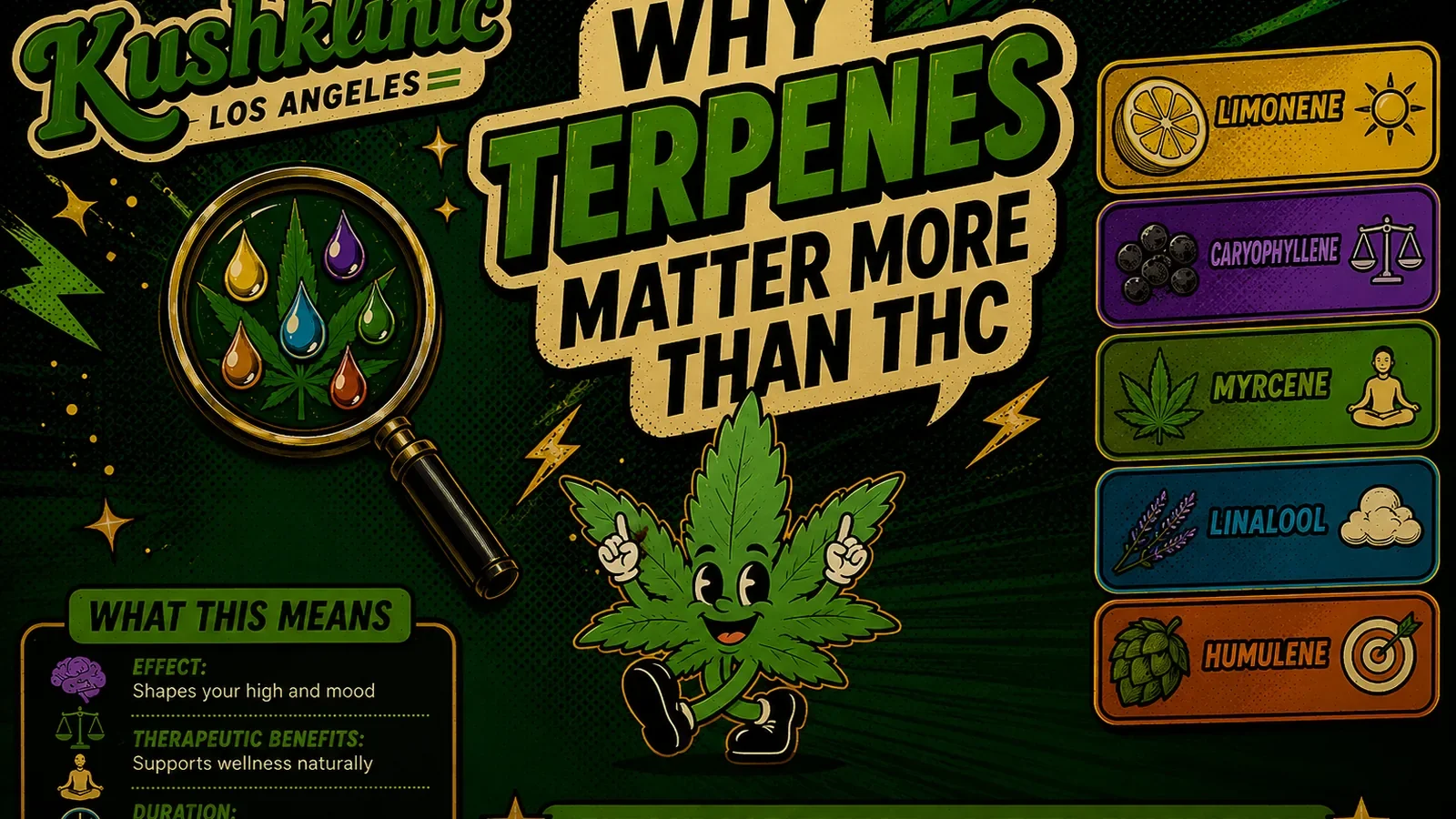
Terpenes are aromatic compounds produced by the cannabis plant. They are responsible for the citrus peel lift in one strain, the peppery bite in another, and the earthy-musk weight in something heavier. They are not unique to cannabis. Limonene shows up in citrus peel. Linalool is tied to the floral side of lavender. Myrcene appears in hops and mangoes. Cannabis just happens to produce a huge range of these compounds in combinations that directly affect how a jar smells, tastes, and lands.
That combination is the terpene profile. It is why one eighth smells like gas and candy while another leans pine, pepper, or fruit. More importantly, it is why one strain feels clearer and more productive while another turns the room slower and softer. You can match THC percentages across both and still get a completely different experience.
Why THC Percentage Keeps Misleading People
THC percentage tells you the rough ceiling for psychoactive potency. It does not tell you the tone of the high, how quickly it opens, how long it stays sharp, or whether the experience feels clean, muddy, racy, grounded, or heavy. That is the mistake behind a lot of legal-market shopping. The number is easy to print on the sticker, easy to sort by, and easy to brag about. It is also incomplete.
That is how shelves end up full of 30% flower that hits without much personality sitting next to 22% flower with a deeper terpene profile, better cure, and more actual character. Connoisseur buyers usually take the second jar. They want flavor and effect structure, not just a flex number. The best flower is not always the highest percentage. It is the best-built total profile.
| What You Read | What It Really Tells You | What It Does Not Tell You |
|---|---|---|
| THC percentage | Approximate potency ceiling. | Flavor, aroma, pacing, and effect character. |
| Terpene profile | How the jar is likely to smell, taste, and feel. | It still does not replace good storage, cure, and genetics. |
| Total story | Potency plus terpenes plus cure quality. | Any single number pretending to summarize the whole experience. |
The Six Terpenes Worth Knowing First
You do not need a chemistry degree to shop smarter. Most of the practical buying difference comes from learning a short list of primary terpenes and what they usually signal. We like starting here because this is enough to change how you read a menu immediately.
| Terpene | Aroma Lane | What We Usually Expect |
|---|---|---|
| Limonene | Citrus, bright peel, zest. | Lift, mood, and more daytime-leaning clarity. |
| Caryophyllene | Pepper, spice, warm bite. | A balancing, grounding body effect. |
| Myrcene | Earthy, musky, darker fruit. | Heavier body relaxation and slower pacing. |
| Linalool | Floral, lavender, soft sweetness. | A gentler, calmer, often evening-friendly feel. |
| Humulene | Woody, hoppy, dry herb. | Sharper focus and a less syrupy finish. |
| Terpinolene | Fresh, piney, almost sparkling. | A clearer, more energizing top note when it leads. |
None of those are absolute promises, and we are not making medical claims here. They are buying signals. The leading terpene sets the direction. The supporting terpenes shape the arc.
The Entourage Effect Is Why The Same THC Can Feel Different
THC does not perform in isolation. That is the whole point of the entourage effect. Cannabinoids and terpenes work together, and the result is a more complete effect profile than a potency number can explain on its own. A high-Myrcene jar at 20% THC can feel noticeably heavier than a lower-Myrcene jar at 28%. A Limonene-led strain can feel brighter and more functional even when the percentage reads lower than the jar next to it.
This is also why cure and storage matter so much. A flower that kept its terpene profile intact will usually feel more complete, flavorful, and intentional than a hotter jar with a flatter aromatic profile. Potency can survive rougher handling better than terpenes do. A lot of disappointing weed is not weak. It is just incomplete.
THC tells you how hard the door can swing. Terpenes tell you what kind of room you are walking into.
How We Actually Read A Terpene Profile
The fastest way to get better at this is to stop treating terpene reading like theory and turn it into a three-step buying habit.
Start with the nose.
Citrus usually points toward Limonene. Pepper usually points toward Caryophyllene. Earth and musk usually point toward Myrcene. Your nose is often the cleanest first clue.
Check what is leading and what is supporting.
A Limonene-led profile with Caryophyllene behind it will usually land differently than Limonene with Myrcene behind it. The lead terpene points the jar in a direction. The support changes the finish.
Match the profile to the actual moment.
If you want daytime lift, stay away from profiles that read too Myrcene-heavy. If you want a slower night, do not force a bright citrus jar and act surprised when it stays chatty.
What This Looks Like On The Current Kush Klinic Menu
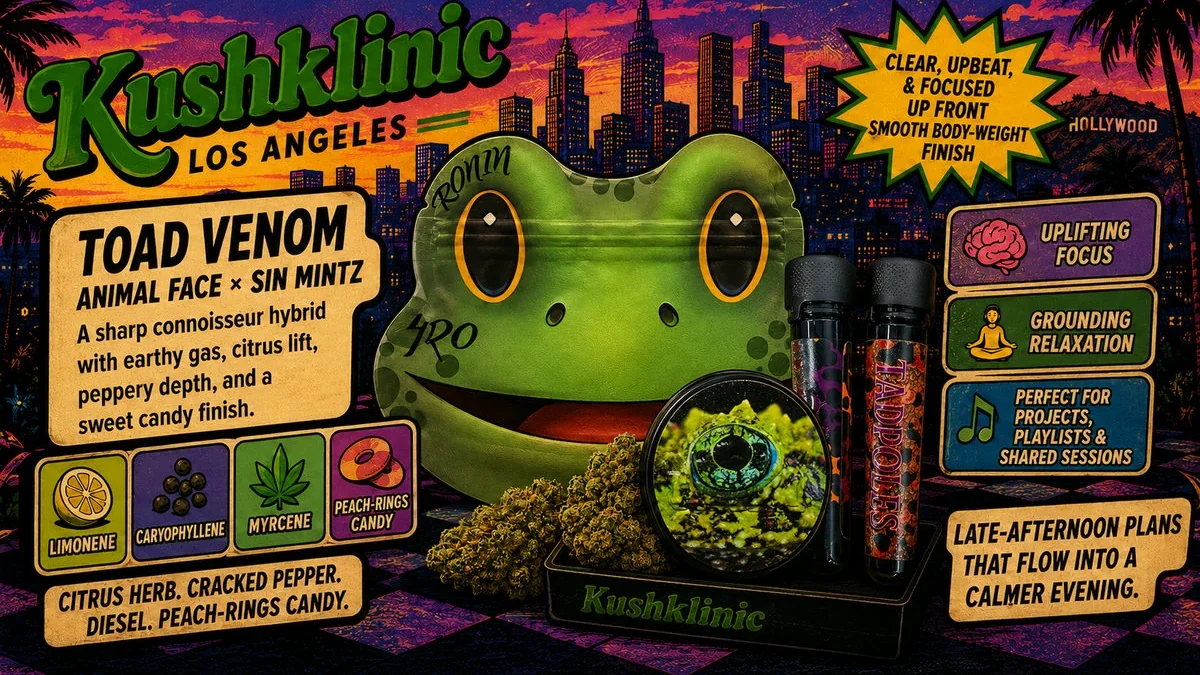
The live menu is a better teacher than generic strain lore because you can tie the theory back to an actual jar. Right now, The Firm - Toad Venom is a clean example of why the terpene conversation matters. It is not interesting because the number on the label is high. It is interesting because the profile stacks citrus lift, peppery grounding, and a smoother body finish into one coherent effect arc.
That is the practical shift. You stop asking which jar has the highest number and start asking which profile best matches the session. We would rather see someone shop the current Kush menu with that lens than buy blind off one sticker metric and hope for the best.
FAQ
Do terpenes really change the high?
Yes. They help shape the flavor, aroma, and overall character of the experience alongside cannabinoids. Two strains with similar THC percentages can still feel meaningfully different because the terpene profiles are different.
What terpene should most people learn first?
We would start with Limonene, Caryophyllene, and Myrcene. Those three alone are enough to explain a lot of the difference between brighter, more functional flower and heavier, more body-forward flower.
Why do some high-THC strains feel flat?
Because high THC without a strong terpene profile can still be one-dimensional. Cure quality, storage, and terpene preservation matter. Potency without flavor or structure often feels louder on paper than it does in practice.
Can I figure this out without a full lab sheet?
Yes. Start with aroma, then use the listed terpenes when brands provide them. The nose is still one of the best fast filters you have.
Read the menu like a connoisseur, not a sticker shopper.
Browse the current shop, confirm your zone on the delivery map, and choose the profile that actually fits the session.
Shop terpene-first.
The best flower is not always the loudest percentage. It is the jar with the profile you actually want to smoke.
For 21+ adult use only · Keep out of reach of children · Cannabis has intoxicating effects